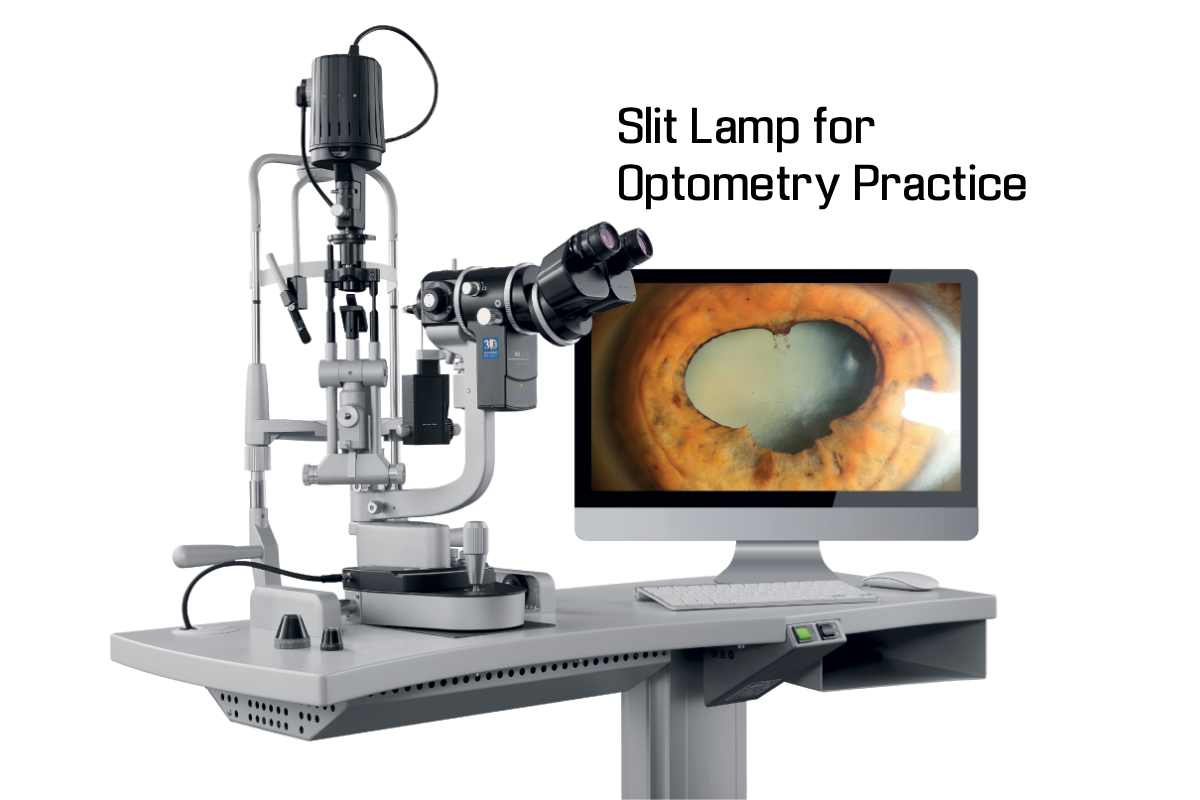
“What’s that light thing you’re shining in my eye?”
That’s the question one patient asked me mid-exam, right after blinking five times in a row like I was performing some ancient ritual.
That “light thing”? The slit lamp. The unsung hero. The MVP of the exam room.
And if you’re setting up—or upgrading—your optometry practice without one, I have just one question:
Why?
The Slit Lamp Is the Real Main Character
Sure, you’ve got a fancy autorefractor. Maybe a retinal camera. But the slit lamp for optometry practice?
That’s your Swiss Army knife.
- It shows you the cornea, iris, lens—like an anatomical Netflix binge, frame by frame.
- It reveals infections, abrasions, even the tiny metal speck your patient swears isn’t in there (but 100% is).
- It’s how you spot early cataracts, narrow angles, corneal neovascularization—before they become real problems.
You don’t just use it.
You rely on it.
It’s Like a Lie Detector for Eyes
Patients say all kinds of things.
“My contacts are fine.”
“It just started yesterday.”
“I definitely didn’t sleep in them.”
You nod. You smile.
Then you swing over the slit lamp, flip the switch, and bam—there it is. Giant papillae. Staining. Maybe a rogue eyelash hiding like it’s in witness protection.
The slit lamp cuts through the noise.
It’s your lie detector, microscope, and flashlight all in one.
Want to Build Trust? Show, Don’t Tell
Nothing wins a patient over like letting them see their own eye drama.
You can tell them about dry eye, or you can show them their fluorescein-stained cornea glowing like a neon sign in Vegas.
You can explain a pterygium, or show them that weird wedge-shaped thing growing across their eye.
(Hint: they’ll remember the visual.)
Today’s patients expect tech. They want modern. They want wow.
And with a slit lamp—especially one with digital imaging—they’ll get it.
Pro tip: Get one that integrates with your EMR and can record. Future-you will thank you during referrals and follow-ups.
Every Good Optometrist Deserves a Great Slit Lamp
Here’s the thing:
Not all slit lamps are equal. Some are built like tanks. Others feel like budget hotel hairdryers.
So what should you actually look for?
- LED vs. halogen? LED wins for longevity and brightness.
- Magnification levels? You want options. (This isn’t amateur hour.)
- Ergonomics? Yes. Your spine matters.
- Digital capabilities? Welcome to 2025.
No, It’s Not “Just a Light”
Let’s kill that myth right now.
A slit lamp is not just a lamp. It’s your diagnostic launchpad.
Without it, you’re guessing. With it, you’re diagnosing confidently. You’re saving vision. You’re preventing chronic disease.
You’re doing what you trained years to do—and doing it better.
And frankly?
You’re also saving yourself from future malpractice headaches, patient dissatisfaction, and that awkward moment when you realize the thing you missed was something a good slit lamp would’ve caught in five seconds.
Final Thought Before You Click Away
This isn’t some clickbait list of “10 gadgets you totally need.”
This is about the one device every eye care professional should own, trust, and probably send a thank-you card to annually.
Don’t make your job harder than it needs to be.
If you’re serious about clinical accuracy, patient trust, and modern care, then investing in a slit lamp for your optometry practice isn’t just a smart move.
It’s common sense.
And honestly? Your future patients’ eyes will thank you.
(So will your sanity.)