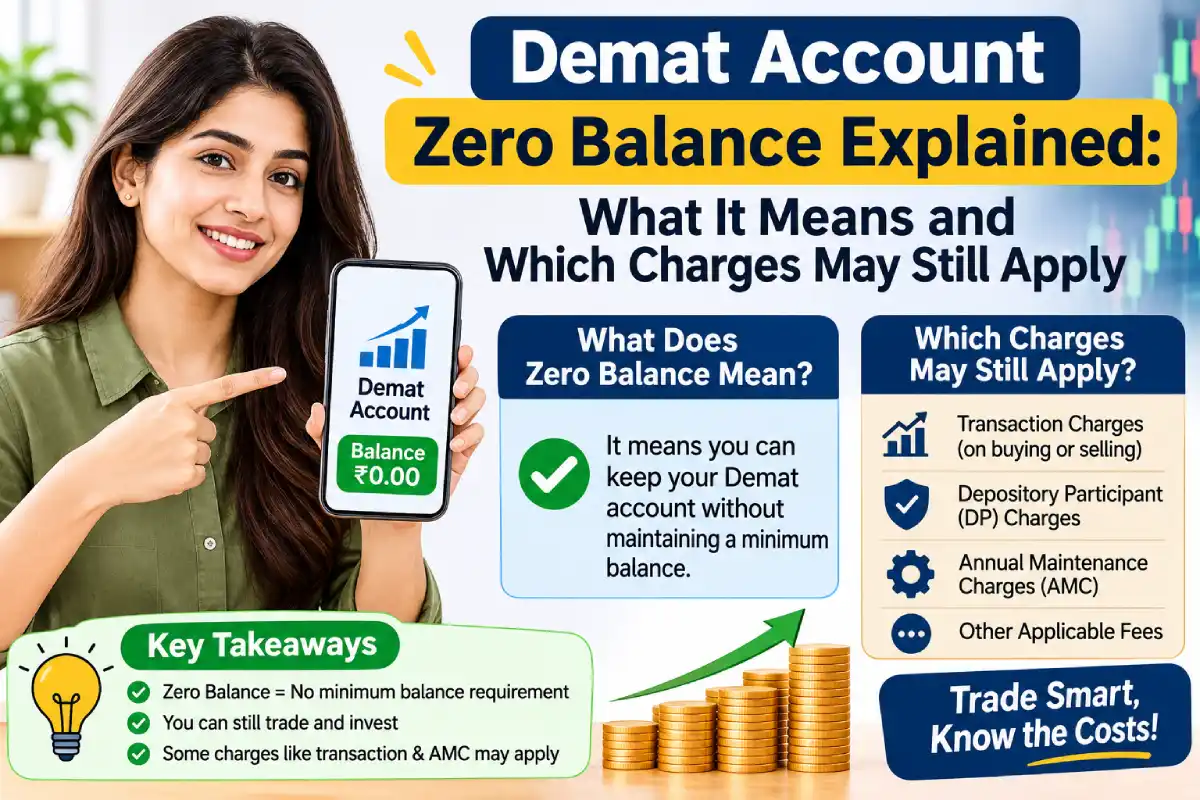
A Demat account can remain empty if an investor has sold all of their shares or purchased nothing. However, some Demat service providers will still charge you maintenance fees or certain fees. Knowing Demat account zero balance means that investors understand how it works, what you may be charged, and if it is financially sensible to leave an account open with no assets.
What Does Zero Balance Mean in a Demat Account?
A zero balance means that the account has no securities at that point. This may happen after an investor sells all their shares, transfers the holdings to another account, or has not yet made a purchase.
Its status depends on the depository participant’s records and account terms, not simply on whether securities appear in the holdings section. Investors should check their statements to confirm whether the account is active, dormant, or closed.
A Demat account zero balance should not be mistaken for a zero-charge account. The value of securities held and the fees for maintaining an account are two separate things.
Which Charges May Still Apply?
An account with no securities may still attract fees, depending on the provider’s tariff and the terms accepted when it was opened. Common charges include:
- Annual Maintenance Charges (AMC): Some providers charge a recurring fee for maintaining an account, even when it holds no shares. Waivers may be available under certain plans.
- Debit Charges: These may apply if you move securities out of your account. Charges vary by provider.
- Other Service Charges: You may be charged for receiving paper statements or making changes to your account or requesting certain services.
- Taxes and Statutory Charges: Tax may apply to chargeable services.
Investors should check the latest tariff rather than rely on an old offer or a general description of an app.
Does a Zero-Balance Account Have Annual Maintenance Charges?
Annual maintenance charges are among the main costs to check when an account has no holdings. A depository participant may charge an AMC for keeping the account open, even if no transaction has taken place during the year.
Some investors may qualify for a Basic Services Demat Account (BSDA). This facility has specific eligibility conditions and a prescribed fee structure. Investors should confirm their eligibility and the current fees with their depository participant.
The phrase Demat account zero balance on an account screen does not confirm that the AMC has been waived. The account opening documents, current tariffs, and fee notifications provide a clearer answer.
How Does a Demat Balance Differ From a Stock Account Balance?
Your Demat account will tell you what investments you have. Your trading account will show you any orders and trades that you have carried out through your broker. You’ll also need a linked bank account.
If you have an investment account with no shares, you may have some money in your trading account. You may also have a charge or be awaiting payment. You should look at each statement individually to identify your position. Your stock account may show you if you have money available or pending. Your Demat statement will show you what investments you have. This will help you identify how much cash you have in your account versus how much you’ve invested.
Sometimes ‘stock account’ is used informally to refer to an investment/trading account. Make sure you check which account your statement relates to before referring to the balance or any fees.
How Can Investors Check and Manage These Charges?
Investors can download their latest Demat statement and review the transaction and fee entries. Any charge should be compared with the provider’s current tariff.
If you are no longer using your account, you can ask your depository participant if you can close the account. You will usually need to move any securities you have into another account or sell them to close the account. Any overdue amounts should be paid in full. The provider may allow you to close your account by requesting online or completing a specific form. Those wishing to keep the account can ask if there is a cheaper option or BSDA service available.
Conclusion
Having a zero balance in your Demat account would mean you have no holdings in the account. However, there is no guarantee that you will be exempted from annual maintenance charges or any other applicable charges. To determine what charges are applicable to you, you can look at your account statements. You can also look at the service provider’s tariff to understand the various options you have to close the account or waive charges. This helps avoid confusion between your cash balance and holdings in a stock account. You can look at the features of the account using 5paisa Alpha before selecting an account.