The alarm doesn’t go off gradually. It happens all at once.
A line stops. Operators stare at a frozen HMI. Someone opens a control cabinet, scans a row of aging modules, and says the sentence every plant manager dreads:
“Do we have a spare for this?”
Silence.
Somewhere in the facility—or worse, somewhere across the global supply chain—a single component determines whether production resumes in minutes… or days.
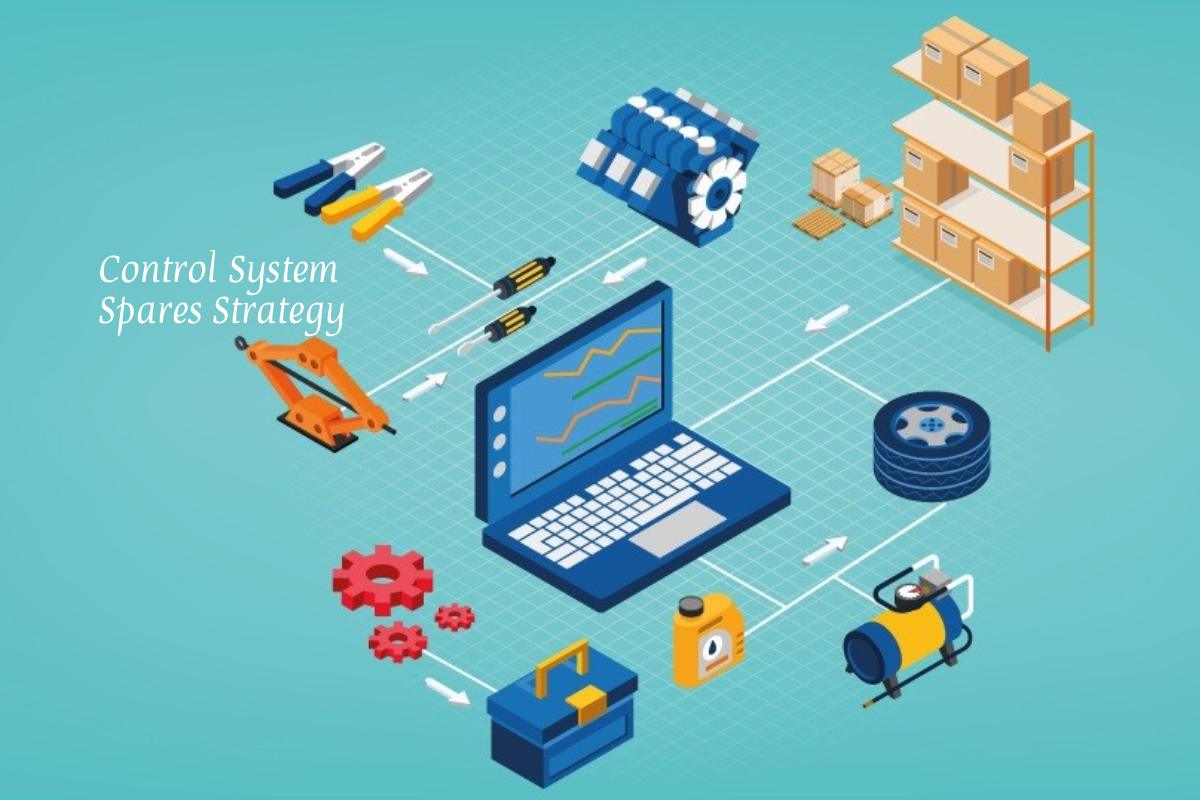
This is why experienced automation teams think carefully about control system spares long before something fails. Because when downtime starts costing thousands of dollars per hour, spare parts stop looking like inventory and start looking like insurance.
Why Spares Planning Is an Engineering Discipline
Many facilities still treat spare parts as an afterthought. Equipment is installed, projects are completed, and then the team moves on to the next upgrade.
Until something breaks.
Control systems are different from many other assets because they age in unusual ways. PLC processors, communication modules, and I/O cards can run reliably for decades—right up until the moment they fail or become obsolete.
And that creates a planning problem.
Manufacturers discontinue products. Firmware compatibility shifts. Replacement lead times stretch from weeks to months.
A well-structured control system spares strategy helps facilities bridge the gap between aging infrastructure and modern automation demands.
The Reality of Legacy Equipment
Walk through most industrial plants and you’ll find a mix of technologies spanning decades.
An assembly line installed in the early 2000s might still rely on controllers that were discontinued years ago. A packaging system added later may use newer PLC platforms. Meanwhile, the latest expansion might integrate cloud-connected industrial networks.
This layered environment is normal.
But it complicates spare parts planning.
Legacy equipment presents two main challenges:
Availability – When manufacturers discontinue parts, replacement modules become harder to source.
Compatibility – Even when modern replacements exist, upgrading may require reprogramming systems or redesigning network architecture.
That’s why many maintenance teams actively search for reliable suppliers like Classic Automation where they can learn more about control system spares and locate discontinued or refurbished automation components when original equipment is no longer produced.
Planning for legacy hardware often means securing spare modules before the last remaining inventory disappears from the market.
Modern Systems Still Need Spares
It’s easy to assume newer automation platforms solve the spare parts problem.
They don’t.
Modern control systems introduce different risks:
- Supply chain disruptions
- Semiconductor shortages
- Firmware compatibility issues
- Network-dependent architectures
Even brand-new controllers can become difficult to source during periods of global manufacturing disruption.
Facilities that maintain spare processors, communication modules, and power supplies avoid scrambling when lead times unexpectedly stretch.
The lesson is simple: modern equipment still fails—and when it does, production rarely waits for shipping delays.
Building a Practical Spares Strategy
A strong spares plan doesn’t mean filling a warehouse with duplicate equipment. Instead, engineers focus on strategic redundancy.
Several key principles guide effective spare part planning.
Identify critical components
Not every device requires a spare. Focus on components whose failure would immediately halt production—controllers, network modules, and specialized I/O cards.
Analyze failure risk
Older modules, heavily used equipment, and parts exposed to heat or vibration typically have higher failure probabilities.
Track manufacturer lifecycle status
Automation vendors regularly publish lifecycle announcements identifying products nearing obsolescence. Monitoring these notices helps teams secure replacements early.
Standardize platforms when possible
Facilities that consolidate around fewer automation platforms reduce the variety of spare components they must maintain.
Source trusted supply partners
As systems age, finding compatible components becomes more difficult. Reliable automation suppliers like Classic Automation can provide refurbished or surplus hardware that extends system life.
The Cost of Not Planning
Downtime is rarely just a maintenance problem.
A halted production line can delay shipments, disrupt supply contracts, and create cascading operational challenges across entire facilities.
In some industries, an hour of downtime can cost tens of thousands of dollars.
Compared to that risk, maintaining a small inventory of critical control system spares is often one of the simplest and most cost-effective forms of operational protection.
The Quiet Side of Reliability
The best spare parts strategy is invisible.
Nothing fails. Production runs smoothly. Maintenance teams rarely need to scramble for replacements.
But behind that reliability sits careful planning—inventory lists, lifecycle tracking, and trusted sourcing partners.
Because in industrial automation, machines may run for decades.
And when one small module finally decides it’s done working, the difference between minutes of downtime and days of disruption often comes down to one question:
“Do we already have the spare?”