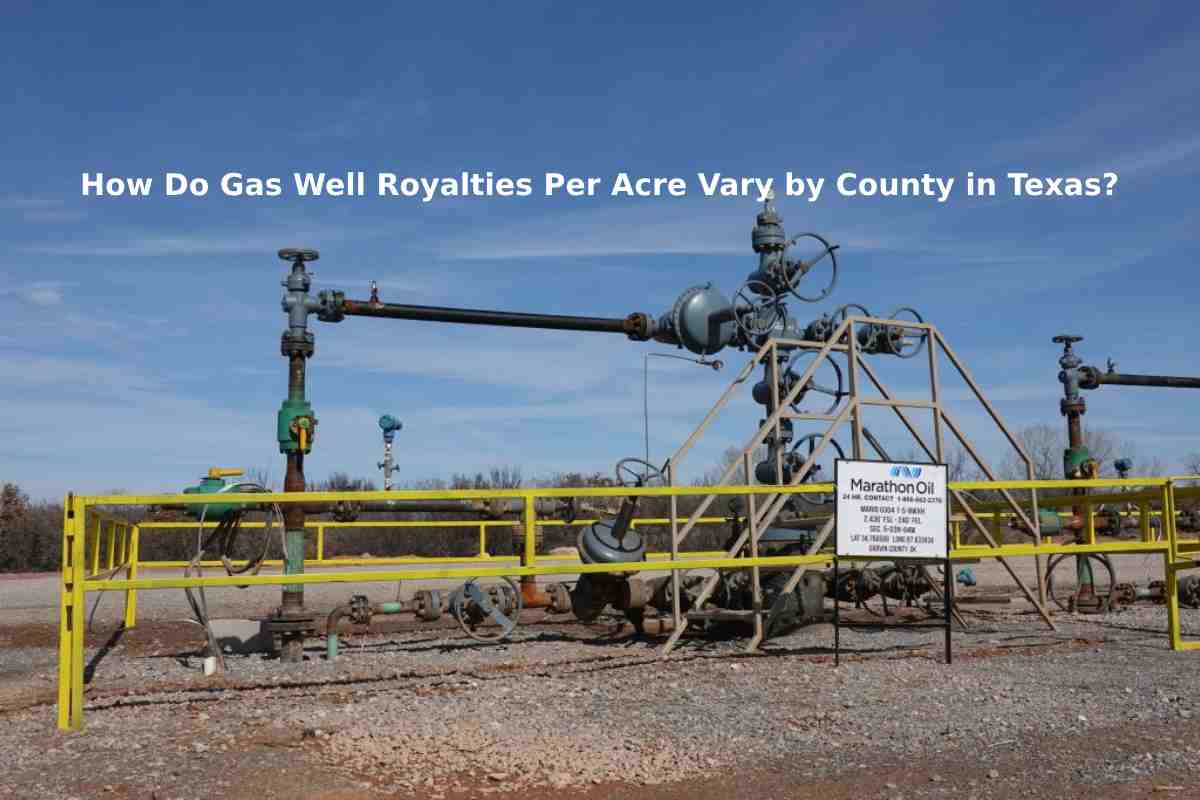
Gas well royalties can vary widely across Texas, making it essential for mineral owners to understand what factors drive these changes in payment. The most important factors influencing the average gas well royalties per acre are mineral content, local market demand, lease terms, and the specific county where the mineral rights are located. In some counties, landowners have seen royalties as high as $800 per acre per month, while other counties may offer significantly less.
Location plays a significant role because production, existing infrastructure, and competition all directly affect the value of mineral rights. Mineral owners interested in maximizing value often compare royalty trends between counties or look into options to sell oil and gas royalties if the market conditions are favourable.
Gas well royalties can provide an income opportunity for landowners and mineral rights holders in Texas, particularly in areas where natural gas production is commercially viable. However, royalty payments vary depending on several factors, including mineral ownership, lease agreements, production volumes, commodity prices, and the specific terms negotiated with energy companies. Similar to rental income from real estate, royalty payments may provide recurring cash flow without requiring the recipient to operate the underlying business directly. Nevertheless, neither arrangement guarantees consistent income, as rental properties may experience vacancies and maintenance expenses while gas royalties depend on production activity and market conditions. Readers interested in understanding another form of property-related income can explore our guide discussing whether rental property can be a source of passive income. Comparing rental income with mineral royalties can help property owners understand how different asset rights may generate income and why financial planning should account for fluctuating payments, expenses, and long-term uncertainties.
Key Takeaways
- Royalties per acre are highly dependent on county and local market conditions.
- Lease terms and production levels are key factors in royalty variations.
- Comparing counties and understanding rights can help owners make informed decisions.
Key Factors Influencing Gas Well Royalties Per Acre in Texas
In Texas, several direct factors shape how much a mineral owner can earn per acre from natural gas production. Location, lease terms, and the chosen drilling methods all make significant differences in practical royalty outcomes.
County-by-County Variability in Royalty Rates
Royalty rates for gas wells can differ widely from one Texas county to another. In places with higher-producing formations like the Permian Basin, competition among operators often leads to higher royalty percentages and better lease terms for mineral owners.
Older fields or remote counties may have standard royalties as low as 12.5%, while more sought-after regions frequently see rates at or above 25%. The local market demand, infrastructure availability, and historical production data all contribute to these variations. Current market prices for natural gas and the proximity to processing facilities can raise or lower the dollar value of royalty payments per acre in each county.
Role of Production and Drilling Methods
Production techniques and drilling methods have a direct impact on gas well performance—and by extension, royalties per acre. Horizontal wells, for example, often reach greater volumes of natural gas than vertical wells, leading to higher payments for mineral interest holders. The age of the well and the rate of decline also influence royalty payments; newer, more productive wells generate more revenue per acre, especially in the early years.
Operators using advanced drilling and completion methods can sometimes recover more gas with each well, raising the ultimate recovery and overall royalty value. If production is spaced out over a larger unit through pooling, the average payment per acre may fluctuate based on well location and performance. These technical and operational decisions shape how much a mineral owner receives from oil and gas production in each county. Competitive drilling regions, such as those in the Permian Basin, are more likely to see greater variability due to differences in operational methods and productivity.
Natural gas royalty payments are influenced by the economic value of production, which can change as commodity prices, operating conditions, and regional energy demand fluctuate. Although mineral rights holders do not necessarily participate directly in financial trading, understanding the differences between income derived from underlying assets and returns from speculative markets can provide useful financial context. For example, forex trading involves currency pairs affected by economic developments and monetary policy, while synthetic indices are typically designed to simulate price movements according to a provider’s underlying methodology. Readers interested in exploring these differences can review our comparison of synthetic indices vs forex trading. Unlike gas well royalties, which arise from contractual interests in natural resource production, speculative trading generally involves exposure to changing market prices and may carry substantial risks, particularly when leverage is used. Recognizing these distinctions can help readers understand why different financial activities require different approaches to evaluating income, volatility, and risk.
County Comparisons and Practical Considerations for Texas Mineral Owners
Gas well royalties per acre in Texas are not uniform and can fluctuate based on county-specific factors, local production levels, and unique regulatory frameworks. Mineral owners need to weigh these variables to effectively manage expectations and financial planning.
Comparative Analysis: Tarrant County and Other Major Producing Areas
Tarrant County stands out as a prominent urban oil and gas production hub, especially within the Barnett Shale. Average royalty payments are often influenced by well location, county regulations, and proximity to infrastructure. In Tarrant County, royalty rates commonly hover around 20% of the net revenue interest, but per-acre returns can differ widely.
By comparison, counties such as Reeves, Midland, and Loving yield higher royalties per acre due to thicker hydrocarbon zones and intense drilling activity. For instance, royalty payments in West Texas fields regularly surpass those in Tarrant County, mostly because of higher production volumes. Data from forums suggest that monthly royalty cheques in some high-activity counties can sometimes reach about $800 per acre with favourable contracts and market conditions.
Understanding Royalty Payments and Owner Rights
Mineral owners in Texas, including those in Tarrant County, receive royalty payments based on their lease terms with oil and gas companies. Royalty cheques reflect a share of the value of produced hydrocarbons, usually calculated as a percentage of the net revenue interest after post-production costs.
Contracts differ by county and company, but the standard royalty rate hovers around 20%. Mineral owners have the right to negotiate lease terms and demand transparency regarding production figures. Publication of royalty statements and prompt payment by companies are required under Texas law. Mineral and royalty owners should review their contract terms closely. Rights include timely payment, accurate reporting, and sometimes, audit privileges if discrepancies arise.
Natural gas prices can influence the revenue generated from producing wells and, consequently, the royalty payments received by mineral rights holders. While individual royalty calculations depend on lease terms, production volumes, allowable deductions, and other contractual factors, broader commodity price movements may affect the financial value of natural gas production. Traders analyzing commodity markets sometimes use technical indicators and chart patterns to evaluate historical price behavior. One example is the triple top pattern, which occurs when prices test a similar resistance level three times without establishing a sustained breakout. Readers interested in understanding this chart formation can explore our guide to the triple top pattern in technical analysis. Although technical chart patterns may help describe market momentum, they cannot reliably predict natural gas prices or determine future royalty payments. Mineral rights holders should therefore distinguish between commodity market analysis and the contractual calculations used to establish royalty income.
Conclusion
Gas well royalty payments per acre can differ widely across Texas counties due to factors like location, current production, and lease terms. For example, royalty rates in some counties may reach approximately $800 per acre per month with favourable contracts, while other locations see lower figures based on local market activity and well performance.